The Complete Guide to Pawn Shop Pal: Everything You Need to Know
Most people think pawn shops are a last resort for desperate times. That's not really true anymore, and honestly it hasn't been for a while. Pawn shops have quietly become one of the most practical financial tools available to everyday people, offering fast cash loans, fair prices on gold and jewelry, and a surprisingly good inventory of used goods at prices that make thrift stores look expensive. Pawn Shop Pal exists because finding a trustworthy pawnbroker near you shouldn't require guesswork, word-of-mouth, or scrolling through a sea of unverified Google results with zero context.
Pawn Shop Pal is a business directory built specifically to connect consumers with local pawn shops, collateral lenders, cash-for-gold shops, estate jewelry buyers, and gold and silver buyers. It's not a random list of businesses scraped from somewhere online. Each listing carries real customer ratings, service details, and location data so you can make an informed decision before you ever walk through the door. This guide covers how the directory works, what to expect from pawn services in general, what the current data tells us about the best markets and businesses, and how to get the most value whether you're looking for a cash loan, trying to sell gold, or shopping for a deal on used gear.
What Is Pawn Shop Pal and How Does the Directory Work?
Think of Pawn Shop Pal as a curated yellow pages, except it's actually useful. The directory is organized so that a consumer looking for pawn shops near me can search by city, by service type, or by specialty. If you need a cash loan against some jewelry you own, you can filter for collateral lenders. If you're trying to sell a gold necklace you inherited and don't know what it's worth, you can look specifically for gold and silver buyers or estate jewelry buyers in your area. That specificity matters, because not every pawn store does everything equally well.
Currently, 136 businesses are listed across the directory, which is genuinely useful without being overwhelming. Some business directories list thousands of businesses with no quality filter and you end up buried in outdated or closed listings. Pawn Shop Pal keeps the list tighter and more verified, which means every listing you're reading is an actual operating business that real customers have reviewed. The average rating across all 136 listings sits at 4.3 stars, which is a number worth pausing on. That's not average-by-default inflated star rating territory; that reflects a real pattern of businesses providing decent service consistently.
Customer reviews are the backbone of how the directory maintains accountability. When someone visits a pawnbroker, completes a transaction, and leaves a review, that feedback becomes part of the public record for that listing. Businesses with strong, transparent practices tend to accumulate higher ratings over time. Businesses that lowball customers without explanation, charge unclear fees, or provide poor service get reflected in their scores. It's a self-correcting system, and it works because pawn shop customers tend to be pretty direct in their feedback. They'll tell you exactly what they thought about the offer they received.
In practice, the directory covers a range of business types that often get lumped together but are actually a bit different from each other. A traditional pawnbroker takes items as collateral for short-term cash loans and stores them until the borrower repays or forfeits. A cash for gold shop is often more focused specifically on buying precious metals and jewelry outright, without necessarily offering loans. An estate jewelry buyer specializes in evaluating and buying jewelry from estates, antique pieces, or inherited collections. And then there are hybrid pawn services operations that do all of it: loans, buying, selling, and specialty appraisals. Knowing which type of shop you're walking into helps you know what to expect.
Pawn Shop Services Explained: What You Can Do at a Pawn Store
Most pawn stores offer three core things: cash loans against items you bring in, outright buying of those items, and selling used goods from their own inventory. Understanding the difference between the first two is the most important thing a first-time customer can know before walking in.
A collateral-based cash loan is when you bring in an item, the shop assesses its value, and offers you a loan for a percentage of that value. You leave the item there as collateral. You get a ticket, a loan agreement, and a set period of time, usually 30 to 120 days depending on state regulations and the shop, to repay the loan plus interest and fees to get your item back. If you don't pay, the shop keeps the item and sells it. You don't owe anything beyond that. No credit check, no income verification, no bank involved. That's the appeal for a lot of people.
Selling outright is simpler. You bring the item, they make an offer, you accept or walk away. You don't get the item back. You just get cash. Typically, the offer will typically be lower than a loan value because the shop is assuming full ownership risk and needs room to resell at a profit. If you're confident you don't want or need the item back, selling is faster and there are no fees or interest to think about.
And yeah, some people forget that you can also just shop at a pawn store. As a rule, the inventory in a well-stocked pawn shop is genuinely unpredictable in a good way. Guitars, power tools, video game consoles, cameras, rings, watches, laptops. Prices are usually well below retail. It's closer to the experience of browsing a good bin store than shopping at a traditional retailer, actually. If you enjoy that kind of treasure-hunt shopping, it's worth checking out bin store options near you alongside your local pawn shop visits, because the two share a lot of the same appeal for bargain hunters.
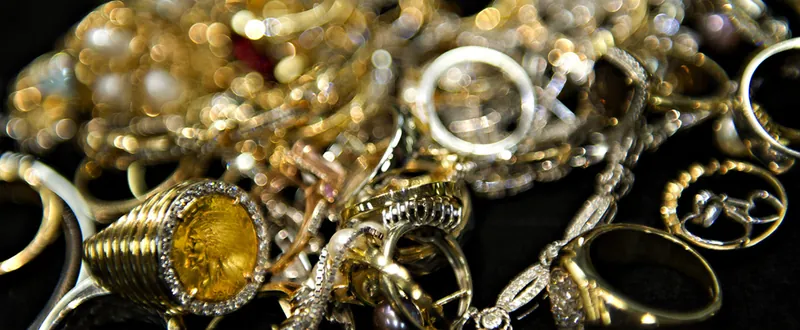
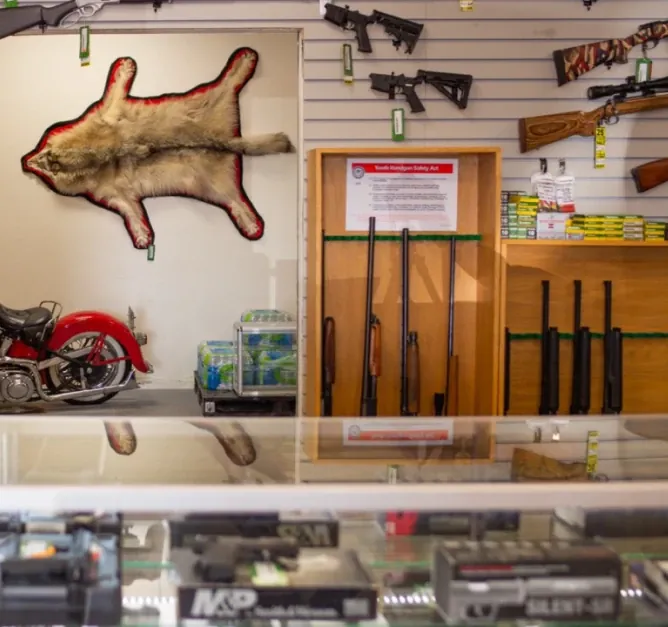
Items accepted at most pawn shops listed in the directory follow a fairly predictable pattern. Gold and silver jewelry is almost universally accepted. Electronics, especially newer smartphones, tablets, and laptops, move quickly. Musical instruments, particularly guitars and amplifiers, are staple pawn shop items that hold value well. Power tools, especially name-brand cordless sets, are commonly accepted. Firearms are accepted at shops that hold the proper federal licensing. Collectibles, coins, and watches are accepted at shops with staff who know how to evaluate them, which is why it's worth checking a shop's specialty areas before bringing in something unusual.
Always bring a valid government-issued photo ID. Most states legally require pawn shops to record your identification for any transaction. If you have original packaging, receipts, or certificates of authenticity for items you're bringing in, bring those too. They can make a real difference in the offer you receive. For jewelry, any previous appraisals or hallmark documentation are worth having. For electronics, make sure everything is charged and functional before your visit.
Interest rates on pawn loans vary by state because pawn lending is regulated at the state level. Some states cap monthly interest at around 2-3%, others allow higher rates. What's standard is that all loan terms should be posted clearly in the shop. If a collateral lender can't or won't tell you the exact interest rate and total cost to redeem your item before you sign anything, that's a problem.
Pawn Shop Pal by the Numbers: Directory Data and the Top Businesses
Numbers tell a story when you know how to read them. With 136 businesses listed across 5 cities and a 4.3-star average rating, the directory reflects a pretty specific thing: these aren't random shops that stumbled into a listing, they're businesses that have earned enough real customer engagement to build a visible reputation.
Breaking down the city distribution is interesting. Birmingham leads with 9 listings, followed by Phoenix at 8, Anchorage at 6, Louisville at 3, and Columbus at 2. Birmingham being at the top might surprise people who picture Phoenix or another large Sunbelt city dominating. But the Southeast has a strong tradition of pawn lending as a financial tool, and Birmingham's density of listings reflects real consumer demand in that market. Phoenix being second makes more sense when you factor in the metro's size and the general transactional culture around gold and jewelry in Arizona, where precious metals move fast.
Anchorage at 6 listings is genuinely interesting. That's a city of around 290,000 people with a significant pawn shop presence relative to its size, which probably reflects both the economic patterns of a resource-economy state and the practical reality that Anchorage residents sometimes need fast liquidity in ways that don't fit traditional banking timelines.
Here's the actual table of top-rated businesses in the directory right now:
| Business Name | Location | Rating | Reviews |
|---|---|---|---|
| Scottsdale Pawn Shop | Scottsdale, Arizona | 5.0 ★ | 870 reviews |
| PawnCo | Phoenix, Arizona | 5.0 ★ | 316 reviews |
| R and F Pawnbrokers | Conway, Arkansas | 5.0 ★ | 50 reviews |
| Freedom Firearms | Las Vegas, Nevada | 4.9 ★ | 6,616 reviews |
| Aztec Pawn | Phoenix, Arizona | 4.9 ★ | 3,140 reviews |
Freedom Firearms in Las Vegas having 6,616 reviews at 4.9 stars is genuinely remarkable. That is not a business coasting on a small sample of happy friends. That's thousands of customers leaving positive feedback over time, which says something real about how they operate. Aztec Pawn in Phoenix with 3,140 reviews at 4.9 stars is similarly impressive. For context, most small businesses consider 200 reviews a solid base. These are outliers in the best possible way.
R and F Pawnbrokers in Conway, Arkansas holding a perfect 5.0 from 50 reviews is worth noting for a different reason. Fifty reviews is a smaller sample, but in a smaller market like Conway, that kind of consistent perfect rating suggests a shop that genuinely takes care of its customers at every transaction, not just when there's high volume to dilute occasional bad experiences.
Across consumer review platforms, the realistic average for a service business tends to fall between 3.8 and 4.2 stars when you account for all businesses, good and bad. A directory average of 4.3 stars across 136 listings means that Pawn Shop Pal's listed businesses consistently outperform the general market. That's not an accident. It reflects what happens when a directory actively curates based on quality signals rather than just listing anyone who asks.
How to Choose the Right Pawn Shop Near You
Using Pawn Shop Pal is pretty straightforward, but getting the most out of any directory requires knowing what to look for beyond just proximity. A shop being five minutes away doesn't help you if they're known for low offers and unclear fees.
Licensing is the first thing to check, and most people skip it. Pawnbrokers are regulated at the state level and are required to hold state licenses to operate legally. Many also hold city or county permits. A legitimate pawn store will display their license prominently. If you're using the directory to research a shop before visiting, look for businesses that have been operating for several years. Longevity in the pawn industry is genuinely meaningful because margins are thin and reputation drives repeat business. Shops that treat customers badly don't usually survive long in markets with competition.
Reading reviews effectively is a skill. Don't just look at the star average; read the actual text of reviews, especially the recent ones. Look for patterns. If three separate reviews from the last six months mention that the shop's offers felt low without explanation, that's useful data. If multiple reviews mention a specific employee by name in a positive way, that's a good sign about the culture of the place. One-star reviews aren't always reliable either; sometimes they reflect a misunderstanding about how collateral lending works rather than any actual misconduct by the business.
Red flags are worth knowing before you go. An unlicensed operation is the biggest one, obviously. But smaller red flags matter too: a shop that won't tell you the interest rate before you sign a loan agreement is a problem. A shop that makes an offer on your item and then significantly changes it at the last moment is a problem. Any shop that can't clearly explain what happens to your item if you don't repay the loan on time should give you pause. These aren't hypotheticals; they're things that happen at poorly run operations, and they're exactly why a directory with real customer reviews exists.
Check whether the shop specializes in what you're bringing. A general pawn store might give you a lower offer on a vintage guitar than a shop that deals in musical instruments regularly and has a customer base that buys them. Same with estate jewelry; a shop with a dedicated estate jewelry buyer on staff will typically evaluate and price a piece more accurately than a generalist counter staff member who's guessing at it.
Tips for Getting the Best Value at a Pawn Shop or Cash-for-Gold Service
Preparation makes a bigger difference than most people think. This isn't complicated, but it does require a few minutes of homework before you walk in.
Know your item's value before you go. For gold and silver, spot prices are publicly available and update constantly. If you know the weight of your jewelry in grams and the karat, you can calculate its melt value in about two minutes online. You won't get melt value at most shops because there's overhead, but knowing the number gives you a baseline for evaluating an offer. If a gold and silver buyer offers you 30% of melt value with no explanation, you have the information to ask why or walk away.
For electronics, check completed eBay sales (not active listings, completed sales) for your specific model in similar condition. That's what the market is actually paying, not what sellers are hoping to get. Pawn shops know these numbers. Walking in with the same data puts you on even footing.
Don't be afraid to visit more than one shop. Getting two or three offers on the same item before committing is completely normal and no reputable pawnbroker will give you grief for it. If a shop pressures you to decide on the spot or acts offended that you want to compare, that tells you something about how they operate. A good shop will make their best offer and let you think about it.
If you're taking out a pawn loan rather than selling, be honest with yourself about whether you'll actually come back to redeem the item. People lose items to pawn shops all the time not because they couldn't technically afford to redeem them but because the 30-day window came and went while they were busy. Some shops offer renewal or extension options, where you pay the interest accrued and roll the loan forward. Ask about this upfront. It's much better to know your options before the deadline than to scramble at the last minute.
Bring multiple items if you have them. Shops often negotiate differently when there's more volume involved. Bringing in a collection of jewelry pieces, or a guitar plus a toolbox, sometimes produces a better overall offer than bringing each item in separately on different days. It's not guaranteed, but it's worth knowing.
Mid-week mornings tend to be the best time to visit a pawn store if you want unhurried attention from staff. Weekends are busy, which means staff are managing more customers and have less time to evaluate items carefully or negotiate thoughtfully. A Tuesday morning at a well-staffed pawnbroker is a genuinely different experience from a Saturday afternoon at the same place. Not every shop will vary that much, but if you have flexibility, use it.
One more thing that doesn't get mentioned enough: the physical condition of your item affects offers more than most people expect, and sometimes in ways you can fix cheaply before going in. A guitar with old, corroded strings gets a lower offer than the same guitar with a fresh set on it. A smartphone with a cracked screen protector but an intact screen underneath should have that protector removed so the staff can see the actual screen condition. Clean your jewelry before bringing it in. These sound like small things, but they affect first impressions and assessments in ways that translate to real dollar differences in offers.
Also, if you're visiting for wellness-related reasons or just as part of a day of errands, some people find it interesting that the same kind of community-minded local business directories that list pawnbrokers also cover things like
More Ways to Save